Listen, if you’re running a support team and you’ve been telling yourself you’ll build a “proper QA program eventually”, right after you put out the current fire: this is your sign to stop lying to yourself.
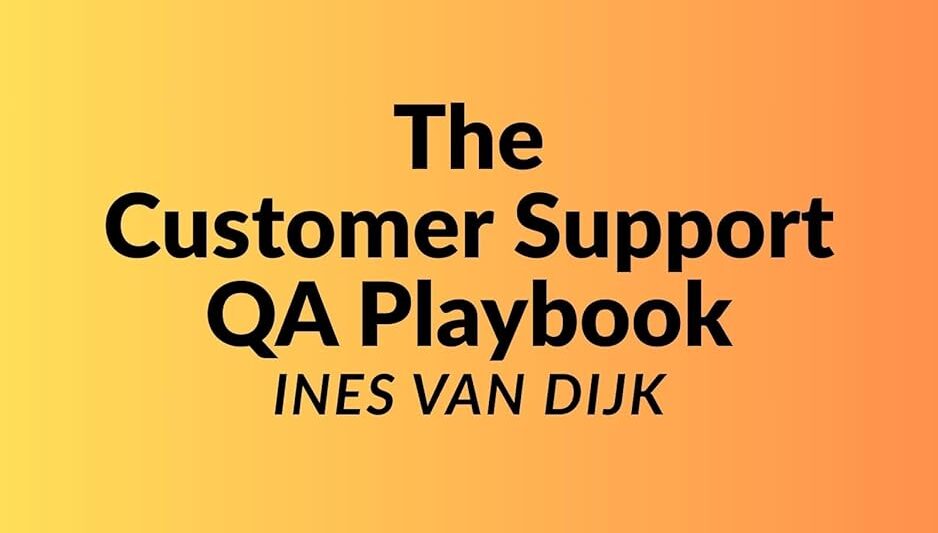
I wrote a book. It’s called The Customer Support QA Playbook, and it’s the step-by-step guide I wish had existed 10 years ago when I was trying to create my own first CS Quality Assessment rubric.
You can order it here in paperback or Kindle format.
Here’s why it exists, and why you probably need to have read it yesterday.
Your support team is growing. Ticket volume is climbing. You’re hiring faster than you can train, and somewhere in the back of your mind, a question keeps nagging: Is our support actually good? Or are we just… busy?
You’ve tried random ticket reviews. You’ve given feedback when you had time. You’ve told yourself you’d systematize it all eventually.
Go ahead and check your calendar for when “eventually” is scheduled. I’ll wait.
Here’s the truth: most support leaders don’t have a quality problem. They have a clarity problem.
You don’t know:
- What “good support” actually looks like for your specific product
- How to measure quality without turning it into compliance theater
- How to give feedback that changes behavior instead of just making people defensive
- How to surface patterns instead of playing whack-a-mole with one-off mistakes
- How to build a system that works when you’re not constantly hovering
And nobody teaches you this stuff. You’re just supposed to figure it out while also managing escalations, hiring, onboarding, and explaining to leadership why CSAT dropped 2 points.
Cool. Super reasonable. Totally not a road to burnout.
What’s My Book Gives You
The Customer Support QA Playbook is not inspirational fluff. It’s not a case study collection from companies with 500-person support teams and unlimited budgets.
It’s the practical, systems-focused framework I use with my consulting clients, now available to everyone who can’t hire me (yet).
Here’s what you’ll learn:
How to design QA rubrics that surface patterns and coaching opportunities instead of just churning out numbers that make everyone feel bad.
How to define “good support” for your product and fact-check to see if your customers agree with that definition.
How to run reviews that lead to growth instead of agents silently resenting you.
How to measure what matters beyond vanity metrics that don’t tell you anything useful (yes, there will be some CSAT hate in there).
How to turn ticket data into strategic insight your leadership team will actually listen to instead of patting you on the head and moving on.
How to scale quality as your team grows without micromanaging or burning out.
How to build feedback loops that connect QA to onboarding, product development, and team performance (because QA shouldn’t exist in a vacuum!).
The book includes templates, rubric examples, review workflows, and the exact frameworks I use with my clients. No gatekeeping. No “well it depends” hand-waving. Just the stuff that works.
Who This Is For
This book is for Support and CX leaders at small to mid-sized SaaS companies who are:
- Outgrowing random ticket reviews and need an actual system
- Struggling to define quality beyond “be nice and use emojis”
- Hiring faster than they can maintain consistency
- Tired of firefighting without understanding why the fires keep starting
- Ready to stop winging it
If you inherited a support team and have this nagging feeling that “something isn’t quite right” but you can’t point to specific data: this book is for you.
If your CEO asked you to “implement QA” and you Googled it and felt immediately overwhelmed: this book is for you.
If you’re a founder trying to scale support safely without sacrificing customer experience (or your sanity): this book is for you.
Why I Wrote It
I’ve built QA programs for teams of 5 and teams of 500. I’ve worked with every support platform under the sun. I’ve seen what works and what turns into expensive theater that nobody believes in. I’ve been on both sides of the isle of feedback processes that worked, and ones that crashed and burned.
And I kept seeing the same pattern: smart, capable support leaders struggling not because they didn’t care about quality, but because nobody had given them a roadmap.
So I wrote the book I wish had existed when I was figuring this out through trial, error, and a lot of stressed-out Googling things like “QA rubric what to put in it” (spoiler: you find a lot of product QA resources that have nothing to do with Customer Support).
What Makes This Different
No fluff. No “support is the heart of your company 💖” inspirational quotes. No theory from someone who hasn’t triaged tickets in a decade.
Just frameworks, templates, and step-by-step processes that work for real support teams with real constraints. Think limited budget, limited time, and agents who are already maxed out.
I built my career translating chaos into clean workflows. This book is that skill, distilled into a guide you can follow from day one.
If you’ve been putting off building “real QA” because it feels overwhelming or you don’t know where to start, this is your roadmap.
And if you’ve tried to build QA before and it turned into a compliance nightmare that everyone hates, this book will show you what went wrong and, more importantly, how to fix it.
Get Your Copy
Order The Customer Support QA Playbook:
- Paperback
- Kindle
- Signed copy: Message me on LinkedIn
Need help actually implementing what’s in the book? That’s literally what I do for a living. I help SaaS companies build their QA programs from the ground up. Book a discovery call and let’s talk.
One Last Thing
If this book helps you build your QA program (or unfuck the one you have), I’d love to hear about it. Message me on LinkedIn, tag me in a post, or find me in the Support Driven Slack community.
And if you know a support leader who’s been trying to build QA while everything’s on fire, send them this link. They’ll thank you.
Now go order the book and stop telling yourself you’ll “figure it out eventually.”
— Ines

Leave a Reply